
As the world of work evolves, many individuals find themselves working remotely. While remote work offers numerous benefits, it also presents unique challenges that can impact productivity and well-being. In this guide, we will explore common challenges of remote work and provide practical strategies to overcome them, ensuring success in a remote work environment.
Understanding Remote Work Challenges
Balancing Remote Work and Personal Life
When working from home, it’s challenging to establish boundaries between Remote Work and personal life. Without a clear separation, individuals may experience burnout and find it difficult to switch off from work responsibilities.
Feelings of Isolation
Remote work can lead to feelings of isolation and disconnection from colleagues. Without the social interactions of an office environment, employees may experience a lack of camaraderie and support.
Distractions and Time Management
Home environments often present distractions that can impact focus and productivity. Additionally, managing time effectively without the structure of a traditional office setting can be challenging for remote workers.
Communication and Collaboration
Effective communication and collaboration can be hindered in a remote work environment. Without face-to-face interactions, misunderstandings can occur, and team cohesion may be affected.
Strategies for Overcoming Remote Work Challenges
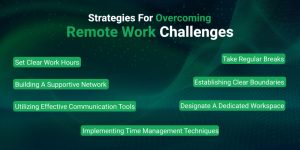
Establishing Clear Boundaries
Create designated workspaces within the home to establish a physical boundary between Remote Work and personal life. Set specific work hours and adhere to them, allowing for a clear transition between work and leisure time.
Building a Supportive Network
Seek out opportunities for virtual social interactions, such as virtual team activities, online networking groups, or informal video calls with colleagues. Building a supportive network can help combat feelings of isolation.
Implementing Time Management Techniques
Utilize time management tools and techniques to enhance productivity. Establishing a structured daily routine, setting specific goals, and utilizing time-tracking apps can help remote workers manage their time effectively.
Utilizing Effective Communication Tools
Leverage digital communication tools to maintain effective collaboration with colleagues. Video conferencing, instant messaging platforms, and project management software can facilitate clear and efficient communication among remote teams.
Designate a Dedicated Workspace
Create a dedicated workspace within your home where you can focus on work. This could be a separate room, a specific corner of a room, or even a well-organized desk. Having a designated area for work helps signal the start and end of the workday, thereby creating a psychological boundary between work and personal life.
Set Clear Work Hours
Establish specific work hours and stick to them as much as possible. Communicate your work schedule to your household members, if applicable, to minimize interruptions during work hours. Creating a routine and sticking to regular working hours can help separate work from personal time and promote a healthier balance.
Take Regular Breaks
Schedule regular breaks throughout the day to step away from your workspace. Use this time to engage in activities unrelated to work, such as going for a short walk, practicing mindfulness, or simply taking a few moments to relax. These breaks can provide much-needed mental and physical separation from work, contributing to a healthier balance.
Establish a Wind-Down Routine
Incorporate a wind-down routine at the end of your workday to signal the shift from work to personal time. This could involve engaging in a relaxing activity, such as reading a book, listening to music, or spending quality time with family. Engaging in activities that bring you joy and relaxation can help you mentally detach from work responsibilities.
Communicate Boundaries with Others
Communicate your boundaries with household members, roommates, or anyone sharing your living space. Setting clear expectations about when you’re working and when you need uninterrupted time can help avoid distractions and unnecessary interruptions during work hours.
Establishing Prioritization and Goal-Setting
Develop a system for prioritizing tasks and setting clear, achievable goals for each workday. Identify the most critical tasks that require your attention. Allocate specific time slots to focus on them. Setting measurable goals can provide a sense of accomplishment and progress, contributing to overall work satisfaction.
Conclusion
Remote work presents a new set of challenges, but with the right strategies, individuals can overcome these obstacles and thrive in a remote work environment. By establishing clear boundaries, building a supportive network, implementing effective time management techniques, utilizing communication tools, and prioritizing well-being, individuals can navigate remote work challenges and achieve success in their professional endeavors. With a proactive and adaptive approach, remote work can be a rewarding and fulfilling experience, allowing individuals to maximize their potential and contribute to their organizations’ success.