
In today’s competitive business landscape, companies are constantly seeking ways to optimize their operations and maximize productivity. One crucial aspect that requires careful consideration is staffing.
Traditionally, businesses have relied on in-house hiring to build their workforce. However, with the rapid advancements in technology and the rise of virtual work environments, virtual staffing has emerged as a great alternative.
In this blog, we will explore the pros and cons of virtual staffing versus in-house hiring, helping you make an informed decision for your organization.
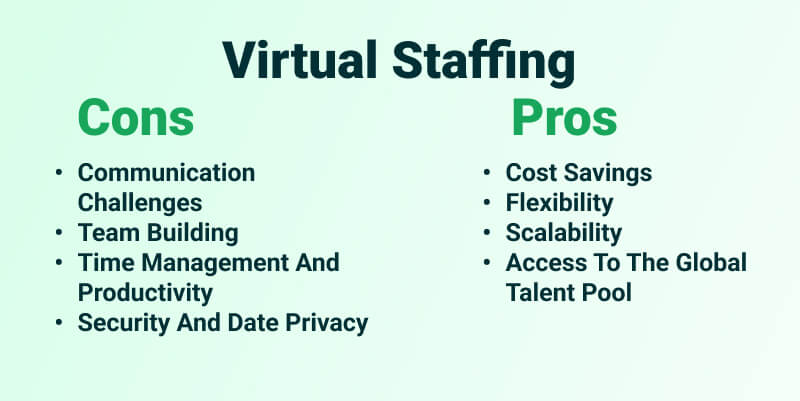
I. Virtual Staffing Pros And Cons:
A) Pros
Cost Savings
Beyond traditional office expenses, virtual staffing can save on costs like travel, relocation, and physical infrastructure for training or onboarding.
Additionally, access to a wider talent pool can open up opportunities for hiring from regions with lower overall compensation packages.
Flexibility
Remote work fosters better work-life balance for employees, leading to increased job satisfaction and potentially reduced turnover. Companies can also benefit from scheduling flexibility, like hiring talent across different time zones to ensure 24/7 operations.
Access to the Global Talent Pool
This benefit extends beyond just finding skilled individuals. Virtual teams can bring diverse perspectives and experiences to the table, boosting creativity and innovation within the organization.
Scalability
Companies can easily scale their workforce up or down based on project needs without the constraints of physical office space or long-term contracts.
B) Cons:
Communication Challenges
Effective communication strategies are crucial for virtual teams. This may involve investing in collaboration tools, establishing clear communication protocols, and practicing mindful communication across time zones and cultural differences.
Also Read: Overcoming Remote Work Challenges
Team Building:
Building strong team bonds can be more challenging in a virtual setting. Regular virtual team-building activities, informal online meetups, and fostering open communication channels can help bridge this gap.
Time Management and Productivity:
Virtual work requires strong self-discipline and time management skills from both employees and employers. Setting clear expectations, outlining deliverables, and establishing regular check-ins can help maintain productivity.
Security and Data Privacy:
Protecting sensitive company data becomes a critical concern with remote workers. Implementing robust cybersecurity measures, data encryption protocols, and clear remote work policies are essential.

II. In-House Hiring:
A) Pros:
Stronger Team Cohesion:
The physical proximity of in-house teams fosters spontaneous interactions, knowledge sharing, and a stronger sense of camaraderie. This can lead to better collaboration, faster problem-solving, and a more positive work environment.
Immediate Access:
In-house employees are readily available for impromptu meetings, brainstorming sessions, and quick clarifications, potentially leading to faster decision-making and improved workflow.
Enhanced Control:
Employers have greater oversight over the work environment, company culture, and employee performance in a physical setting. This can be beneficial for maintaining brand consistency, ensuring quality control, and implementing training programs effectively.
B) Cons:
Higher Costs:
Beyond office space and equipment, in-house hiring can involve additional costs like employee benefits, insurance, and overhead expenses associated with maintaining a physical workspace.
Limited Talent Pool:
Geographic restrictions can limit the pool of potential candidates, potentially leading to missed opportunities to hire top talent from outside the local area.
Lack of Flexibility:
In-house work often comes with set working hours and locations, offering less flexibility for employees who may prefer remote work arrangements or have personal needs that require flexible schedules.
Conclusion:
Ultimately, the choice between virtual staffing and in-house hiring depends on a variety of factors specific to each organization.
Carefully weigh the pros and cons of each approach in light of your company culture, budget, talent needs, and desired work environment.
Consider a hybrid model that combines the benefits of both virtual and in-house teams to best suit your unique requirements.
Remember, embracing new and flexible work models can unlock increased productivity, attract top talent, and contribute to long-term success in today’s dynamic business landscape.